
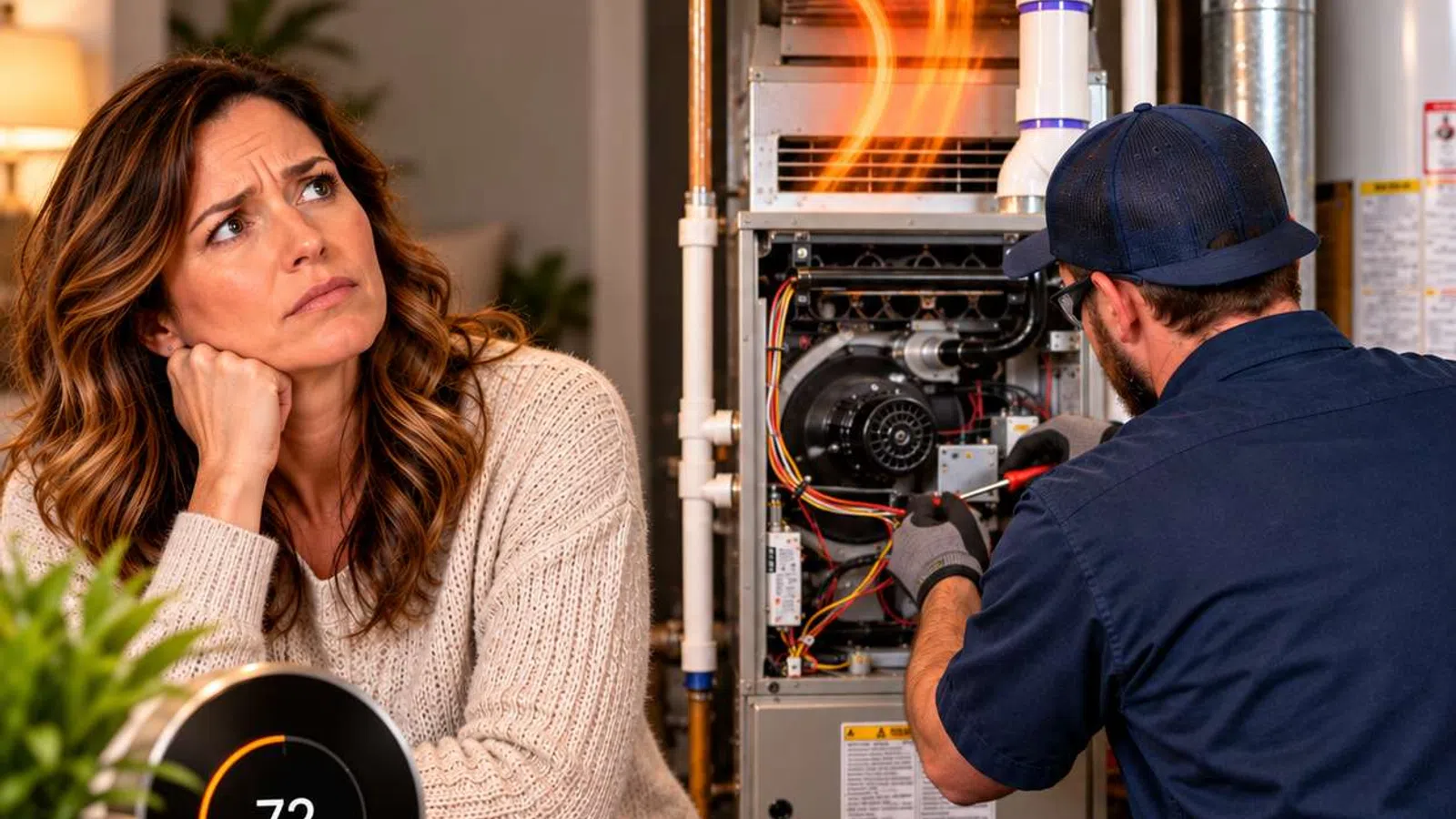
When temperatures drop in Georgia, your heating system naturally runs more often. But if it seems like your furnace or heat pump never shuts off, you may start wondering: Why is my heater running constantly—and is something wrong?
At Guardian Home Experts, this is a question our technicians hear from homeowners throughout Metro Atlanta. Sometimes, longer heating cycles are completely normal. Other times, a heater that continuously runs can be a sign of an airflow problem, thermostat issue, equipment malfunction, or a system struggling to keep up with the home.
Understanding the difference can help you know when to troubleshoot and when it's time to call an HVAC professional.
Is It Normal for My Heater to Run Constantly When It's Cold Outside?
Sometimes.
During an unusually cold Atlanta night, your heating system may need to operate for extended periods to maintain the temperature you've selected. Heat pumps in particular can have longer run cycles than traditional gas furnaces. They typically deliver heat differently, so a longer cycle doesn't automatically mean something is wrong.
However, if your home isn't reaching the thermostat setting, your energy use suddenly increases, or your heater runs nearly nonstop even during milder weather, the system deserves a closer look.
1. Start With Your Air Filter
Before assuming you have a major heating repair, check your air filter.
This is one of the simplest things homeowners can do themselves—and one of the first places to look when airflow is restricted.
A heavily clogged filter can make it difficult for your system to move conditioned air through your home. The heater may run longer trying to reach the desired temperature, while comfort suffers.
At Guardian, we regularly remind homeowners that something as simple as proper airflow can have a major impact on HVAC performance.
2. Check Your Thermostat Settings
Your thermostat tells the HVAC system when to operate, so start with the basics.
Make sure the thermostat is set to HEAT and the fan is set to AUTO, not ON. When the fan setting is ON, the blower can continue running even when the furnace isn't actively producing heat. That can make it seem like your heater never shuts off.
Also consider your temperature setting. Asking your system to maintain 75°F during an especially cold night may require substantially more runtime than maintaining a lower indoor temperature.
3. Your Home May Be Losing Heat
Sometimes the heating system isn't the only issue.
Poor attic insulation, leaking ductwork, older windows, air leaks around doors, or other areas of heat loss can cause a heater to work overtime.
Our technicians don't just look at whether the furnace turns on. Heating performance is about the entire system—the equipment, airflow, ductwork, thermostat, and the home's ability to retain conditioned air.
That's why proper diagnosis matters.
4. Your Furnace May Need Professional Attention
A heater that constantly runs can also indicate a mechanical or performance problem.
A dirty or malfunctioning component, blower issue, thermostat problem, duct restriction, control issue, or other equipment failure may prevent the system from heating properly.
This is where homeowners should be careful about DIY repairs.
Your heating and air conditioning equipment is one of the most expensive systems in your home. Furnaces also involve electricity and, in many Metro Atlanta homes, natural gas and combustion. Diagnosis and internal repairs should be left to appropriately trained professionals.
At Guardian Home Experts, we believe the goal isn't simply to replace a part. It's to determine why the system isn't performing correctly and explain what we find.
5. Your HVAC System Could Be Improperly Sized
Bigger isn't always better when it comes to HVAC equipment.
A system that's not properly matched to the home's heating requirements can create comfort and performance issues. If you've experienced heating problems since the system was installed—or certain rooms consistently struggle to stay comfortable—equipment sizing and ductwork may need to be evaluated.
A professional HVAC assessment can help determine whether the problem is the equipment itself or something else within the home.
6. Your Heat Pump May Be Using Auxiliary Heat
If you have a heat pump, colder outdoor temperatures can cause the system to operate differently than you're accustomed to seeing during milder weather.
Depending on the system and conditions, auxiliary heat may help maintain indoor temperature. Seeing AUX HEAT on your thermostat occasionally isn't necessarily a problem.
But if auxiliary heat seems to run excessively, your home isn't warming properly, or your utility bill suddenly jumps, it's worth having the system inspected.
When Should I Call Guardian for a Heater That Won't Stop Running?
Start with the things you can safely check yourself: your filter, thermostat settings, open vents, and obvious airflow obstructions.
If the heater still won't shut off, can't reach the thermostat setting, produces unusual noises or odors, or your energy costs suddenly increase, it's time for professional diagnosis.
Guardian Home Experts serves homeowners throughout Marietta, Kennesaw, Acworth, Cartersville, and Metro Atlanta with heating repair, furnace service, heat pump repair, maintenance, and replacement.
Our approach is simple: diagnose the problem, show you what we find, explain your options, and help you make an informed decision about your home.
Quality work. Quick service. Exceptional value.
That's how Guardian Home Experts works to create Customers for Life.
Frequently Asked Questions About a Heater Running Constantly
Why is my heater running constantly?
A heater can run constantly because of a dirty air filter, thermostat setting, restricted airflow, heat loss from the home, ductwork problems, equipment issues, or extremely cold outdoor temperatures. Heat pumps may also operate for longer periods than gas furnaces, especially during colder weather.
Is it normal for my furnace to run continuously when it's cold outside?
Longer heating cycles can be normal during unusually cold weather, particularly when the temperature outside is significantly lower than the thermostat setting. However, if your furnace never shuts off or can't reach the desired indoor temperature, the system may need professional inspection.
Why won't my furnace reach the temperature on my thermostat?
A dirty filter, airflow restriction, thermostat problem, duct leakage, equipment malfunction, inadequate insulation, or other heating-system problem can prevent a home from reaching the thermostat setting. A professional diagnosis can determine whether the problem is with the heating equipment or another part of the home.
Should my heat pump run constantly in cold weather?
Heat pumps often have longer heating cycles than gas furnaces, especially as outdoor temperatures fall. Longer operation does not necessarily indicate a problem. However, if your home isn't staying warm, auxiliary heat is operating excessively, or your energy bill suddenly increases, the system should be inspected.
Can a dirty air filter cause my heater to run constantly?
A heavily clogged air filter can restrict airflow through the HVAC system. This can reduce heating performance and cause the system to operate longer while trying to reach the thermostat setting.
Why is my furnace running when the thermostat temperature has been reached?
Check whether your thermostat fan is set to ON rather than AUTO. With the fan set to ON, the HVAC blower can continue circulating air even when the furnace is no longer actively heating. If the furnace itself continues heating after reaching the thermostat setting, professional diagnosis may be needed.
When should I call an HVAC professional for a heater that won't stop running?
Consider professional service if the heater runs continuously and cannot reach the thermostat setting, your energy use suddenly increases, you notice unusual noises or odors, the system repeatedly cycles incorrectly, or basic checks such as the filter and thermostat settings don't resolve the problem.